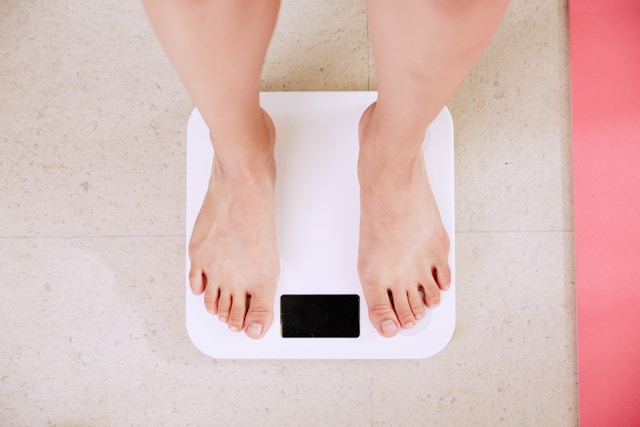
Everything about weight loss is changing. Frankly, we’re in the early stages of a revolution in weight loss treatments.
If you’ve seen the names Ozempic, Wegovy, or Zepbound floating around in conversations, on social media, or in the news lately, you’re not alone. These drugs have become cultural shorthand for a new era in weight management, one that some researchers are calling the most significant shift in obesity treatment in decades.
But what exactly are these medications? How do they work? And are they right for everyone? Let’s break it all down.
Please note that this article is for information purposes only and you should consut your doctor about using any medications or supplements.
What Is a GLP-1, Anyway?
GLP-1 stands for glucagon-like peptide-1 — a hormone your body produces naturally after you eat. When food hits your digestive tract, GLP-1 is released into the bloodstream, where it does several important jobs: it signals the pancreas to release insulin, slows the pace at which your stomach empties, and crucially travels to the brain to tell it you’re full.
GLP-1 receptor agonists are drugs that mimic this hormone. Originally developed to treat Type 2 diabetes, researchers soon noticed something striking: patients taking them were losing significant amounts of weight. Clinical trials followed, and the results were impressive enough to lead to FDA approval for obesity treatment.
The two big names you’ll hear most often are semaglutide (sold as Ozempic for diabetes and Wegovy for weight loss) made by Novo Nordisk, and tirzepatide (sold as Mounjaro for diabetes and Zepbound for weight loss) made by Eli Lilly. Tirzepatide goes a step further by also targeting a second hormone called GIP, which may partly explain why it tends to produce even more dramatic results.
How Well Do They Actually Work?
In a word: remarkably. Clinical trials have shown average weight loss of 15–22% of body weight, a level of effectiveness that hadn’t been seen with any previous weight-loss medication. To put that in perspective, someone weighing 250 pounds might lose 37 to 55 pounds over the course of treatment.
That’s meaningful not just aesthetically but medically. Losing that amount of weight can reduce the risk of heart attack, stroke, sleep apnea, joint problems, and a range of other conditions closely linked to obesity.
The impact is already showing up in population-level data. A Gallup poll found that obesity rates among Americans dropped from 39.9% in 2022 to 37.0% in 2025, a decline of 7.6 million people, a shift that researchers have tied at least in part to the growing use of GLP-1 medications. By late 2025, more than 30 million Americans were taking a GLP-1 drug for weight loss. That’s a staggering number!
I’ve seen this with friends. Most of them are very happy with these drugs and the effects are very noticeable and often dramatic.
The “Food Noise” Effect
One of the most striking things patients report when taking these medications isn’t the number on the scale, rather it’s a sudden quiet in their heads. People who have spent years obsessively thinking about food, like what to eat next, how to resist cravings, guilt after eating, and they describe that mental chatter simply fading away.
Doctors call this reduction in “food noise,” and it helps explain why GLP-1s feel so different from traditional dieting. Most diets fight your biology; these drugs work with it. By amplifying the satiety signal your body already produces, they make it easier to eat less without the white-knuckle willpower that tends to collapse over time.
Big News in 2026: The First Weight-Loss Pill
For years, GLP-1 treatments meant a weekly injection, involving a needle you give yourself at home, similar to how diabetics use insulin pens. That was a barrier for many people: those who are needle-averse, those who travel frequently, or those without reliable refrigeration (the injectables need to be kept cold).
That changed at the end of 2025, when the FDA approved oral semaglutide, a daily pill version of Wegovy. As of early 2026, it had already been prescribed to roughly 170,000 people, outpacing the adoption rate of the injectable versions. Eli Lilly is also seeking FDA approval for its own once-daily weight-loss pill, orforglipron, which has the added advantage of requiring no restrictions on food or water when taken.
Starting doses of the new GLP-1 pills are expected to cost as little as $149 per month for patients paying out of pocket, compared to $349 or more for the injectables, making them more accessible for people whose insurance doesn’t cover obesity treatment.
Beyond Weight Loss: A Drug Class With Surprising Range
Perhaps the most surprising development of recent years is how far beyond weight loss these drugs are proving useful. As noted in a recent New York Times article, researchers are actively studying GLP-1s for a remarkable range of conditions:
- Heart disease: A large study called SELECT found that semaglutide reduced the risk of heart attacks and strokes in people with cardiovascular disease. The FDA has now approved GLP-1s specifically to reduce cardiovascular risk, not just manage weight.
- Sleep apnea: Studies show meaningful improvement in obstructive sleep apnea, now an approved indication.
Liver disease: Trials are underway for metabolic liver disease. - Addiction: Doctors began noticing anecdotally that patients on GLP-1s were drinking less alcohol and smoking less. Studies are now formalizing what appears to be a real connection between these drugs and reduced addictive behavior.
- Arthritis, kidney disease, and neurological conditions: Research is early, but preliminary signals are generating significant scientific interest.
As one Harvard cardiologist put it, GLP-1s are no longer understood simply as a diabetes drug or even a weight-loss drug. Their role “is now being understood to be much, much more fundamental to human health.”
The Times article even describes a case where the GLP-1 helped ease long-term symptions from a severe consussion.
One of the most mysterious and fascinating ways they work is through reducing inflammation. Inflammation is part of the body’s natural response to injury and infection. It can signal healing, but it can also be present and harmful in the context of chronic disease. Dr. Drucker’s lab at the University of Toronto has pivoted from studying chronic diseases like diabetes and obesity to unraveling the immune system effects of GLP-1s. “We realized very quickly one underlying theme of all these was inflammation,” he said, of the diseases.
This is prompting researchers to look at how GLP-1s can affect any condition caused by inflamation.
The “Easy Button” Debate: Who Should Really Be Taking These Drugs?
With any powerful new tool, there’s a temptation to reach for it before asking whether it’s the right tool for the job. And that’s a genuine tension in the GLP-1 conversation.
As these medications have gone mainstream, and as compounded, lower-cost versions have multiplied through telehealth platforms, some people are using them primarily for cosmetic reasons: to drop 15 or 20 pounds before a wedding, a reunion, or beach season, rather than to treat a serious chronic health condition. Critics, including some physicians, worry this is a misuse of powerful pharmacology. one that sidesteps the harder work of building sustainable habits around food and movement.
Their concern isn’t baseless. The data on what happens when people stop taking GLP-1s is sobering. Studies show that within 12 months of discontinuing the medication, patients regain an average of two-thirds of the weight they lost. One major review found that people who stopped weight-loss drugs, including GLP-1s, regained weight four times faster than people who stopped dieting or exercising. When you stop the drug, the food noise comes back. The cravings return. And if no new habits were built during the treatment window, there’s little to fall back on.
There’s a metabolic wrinkle here too. When people lose weight on GLP-1s without exercising regularly, they tend to lose not just fat but also muscle mass. If they regain the weight afterward, they regain it mostly as fat, which can leave them metabolically worse off than where they started, even if the number on the scale looks similar.
The medical consensus is increasingly clear: GLP-1s work best as one part of a broader approach, not a standalone solution. Exercise, particularly strength training, combined with adequate protein intake helps preserve muscle during weight loss and improves the odds of keeping weight off after treatment ends. “Stopping GLP-1s without a plan can set you up for weight regain,” notes one obesity medicine specialist. “The best strategy is to treat GLP-1s as a tool that works alongside lifestyle changes, sleep, stress management, and ongoing support.”
But For Many People, It’s Not That Simple
Here’s where the conversation has to make room for a harder truth: for a significant portion of people struggling with obesity, willpower and lifestyle changes were never going to be enough; not because they weren’t trying, but because biology was working against them from the start.
Obesity is not, as it has long been framed, simply the result of eating too much and moving too little. It’s a complex, chronic condition shaped by genetics, hormones, neurological wiring, gut microbiome, early-life environment, sleep, stress, medications, and more. Research has clearly established that some people produce too little of the GLP-1 hormone naturally, meaning their brains receive a chronically weaker satiety signal after eating. No amount of discipline can compensate for a body that genuinely doesn’t register fullness the way other people’s bodies do.
Genetics also plays a measurable role in how effectively these drugs work. New research from 23andMe analyzing data from nearly 28,000 GLP-1 users found that specific genetic variants influence both the degree of weight loss and the likelihood of side effects. About one in ten people who take GLP-1s are considered non-responders, they lose less than 5% of body weight, and emerging evidence suggests genetics partly explains why. Sex, age, and underlying health conditions like Type 2 diabetes also affect outcomes significantly.
For people with severe obesity, or obesity compounded by conditions like heart disease, sleep apnea, Type 2 diabetes, or fatty liver disease, the medical stakes are high enough that GLP-1s function less as a lifestyle shortcut and more as essential treatment for a serious disease. Many of these patients have already spent years or decades trying conventional interventions, caloric restriction, exercise programs, behavioral therapy. only to watch their bodies fight back through hunger hormones and lowered metabolism. For them, the arrival of GLP-1s isn’t an easy button; it’s the first medication that has actually worked.
Obesity is increasingly recognized as a chronic health condition with roots in genetic, socioeconomic, and environmental factors, not simply a result of personal choices, yet it is still often perceived as a failure of willpower, a stigma that discourages patients from seeking care. GLP-1s are, in a meaningful sense, reshaping that perception by making the biological basis of obesity visible and treatable.
The most honest framing may be this: for people using GLP-1s as a shortcut without building habits, the results are likely temporary. For people who genuinely need them, and many do, they may be a lifelong tool, not unlike blood pressure medication or statins. Just as we don’t tell someone with hypertension to simply “try harder,” we shouldn’t assume everyone with obesity can solve the problem through discipline alone.
The Catch: Cost and Access
If GLP-1s are so effective, why isn’t everyone on them? It really comes down to cost, though that is changing ralidly, and there are companies making millions offering lower cost alternative formulations.
Side effects are also a real consideration. The most common complaints are gastrointestinal — nausea, constipation, and vomiting — particularly in the early weeks of treatment. Most people adjust over time, but about 5% of patients either don’t respond to the drugs or cannot tolerate them. As with any medication, the decision should be made in consultation with a doctor.
Looking Ahead
The science is moving fast. Researchers are already exploring next-generation molecules that may produce even greater weight loss with fewer side effects. The World Health Organization added GLP-1 therapies to its Essential Medicines List in 2025 and issued its first formal global guideline on their use in obesity treatment — a sign of how quickly this class of drug has moved from experimental to mainstream.
There are still open questions: What happens when people stop taking the drugs (weight typically returns)? What are the effects over decades of use? How do we ensure equitable access globally, where these treatments currently remain out of reach for the vast majority who could benefit?
But few medical observers doubt that something genuinely new has arrived. For people who have struggled with obesity for years, cycling through diets, blaming themselves for a problem that is rooted in biology , GLP-1 drugs represent something that hasn’t always been on offer: a treatment that actually works.
