Category: Research (Page 15 of 93)

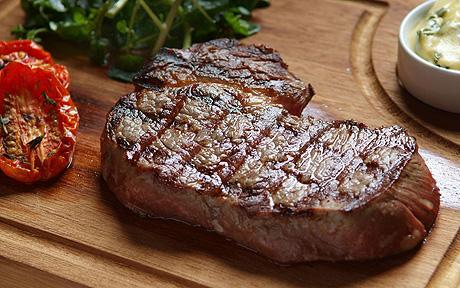
Meat Is Macho, Veggies Are Girlie

It seems like vegetarians have an image problem; they’re feminine.

In an effort to encourage men toward better, healthier diets, it is necessary to make veggie burgers and salads more masculine.

“In the (distant) past, meat was associated with strength. It was important for males to have more muscles than females in our social evolution — for hunting and fighting,” said Wansink, the John S. Dyson endowed chair of marketing at Cornell University. “That association remained — not between protein and muscles but between meat and muscles. It started a long time ago and it’s still powerful today.”

Routine PSA Tests For Men Rejected By Expert Panel

The definitive answer is in on regular PSA screening for men.

The U.S. Preventive Services Task Force suggests that the prostate-specific antigen test is not providing ample benefit and the risks of population-wide screening outweigh the benefits.

The test, which measures a protein in the blood, does not diagnose cancer. It looks for a tell-tale sign that cancer may be present. (The other commonly used technique, a DRE, or digital rectal exam, is used by doctors to feel for prostate abnormalities that have already become palpable.) A positive test usually kicks off a series of events such as a confirming biopsy, and then treatments including surgery, radiation, chemotherapy and hormone deprivation.
Because the test often results in false positives, and because it can’t tell how aggressive or benign a cancer may be, doctors and patients are often in the dark about whether the tumor requires treatment. So, out of caution, most men with positive PSA tests are biopsied and, if cancer is found, treated.
“Thus,” the task force stated, “many men are being subjected to the harms of treatment of prostate cancer that will never become symptomatic. PSA-based screening for prostate cancer results in considerable overtreatment and its associated harms.”

This decision, however, is met with controversy and you should always consult with your physician.

All cases are different and mitigating circumstances come into play with the health of each individual.
Eating On A Schedule Helps Reduce Weight Gain

For optimal nutrient digestion and absorption, eating on a schedule may be the best way to help your body keep off excess weight.

This may be the overlooked factor in the weight loss equation.

“Every organ has a clock,” said study researcher Satchidananda Panda, of the Salk Institute for Biological Studies in La Jolla, Calif. That means there are times that our livers, intestines, muscles and other organs work at peak efficiency, and other times when they are — more or less — sleeping, Panda said.
These metabolic cycles are critical for processes such as cholesterol breakdown, and they should be turned on when we eat and turned off when we don’t, Panda said. When mice or people eat frequently throughout the day and night, it can throw off those normal metabolic cycles, he added.

Summer Alert: Leading Cause Of Death For Toddlers Is Drowning

The Center for Disease Control reports that the leading cause of death for toddlers is drowning.

Summer is the time to relax and enjoy the sun but pool safety should never be overlooked.

Water survival skills, knowing CPR, fences around pools and life jackets and floating devices are no substitute for adult supervision of little ones.

Death rates were highest for children between ages 1 and 4. In this age group, about 2.5 deaths occurred for every 100,000 children in the population, the report said. Overall, there were 1.3 deaths per 100,000 people in the United States. More than half of all people treated in emergency rooms for near drowning were less than 4 years old, the report said.

Good Fats Benefit Your Brain

When it comes to our bodies we all know that the good fats are best.

But what about our brains?

The results published online May 18 in the journal Annals of Neurology has shown that the cognitive function of older women who ate monounsaturated fats was better than those who ate saturated and trans fats.

Compared with those women who ate the lowest amounts of saturated fats, women in the highest saturated-fat category showed worse overall cognition and memory over the four years of testing. Women who ate the most mono-unsaturated fats, which can be found in olive oil, had better patterns of cognitive scores over time. Trans fats weren’t associated with changes in cognition over time, the researchers reported.

With diseases such as Alzheimer’s and dementia on the rise, the benefits could be greater that simply better memories and improved cognition.

Preventive measures to stem the increase of debilitating brain illness could benefit millions.

« Older posts Newer posts »

© 2026 MedClient.com

Theme by Anders NorenUp ↑