We all know that AI and robotics are coming to healthcare. It’s inevitable.
This is particularly true when it comes to caring for our seniors. Nursing homes are stretched thin when it comes to resources. We’ve all heard horror stories about inadequate care and supervision in some nursing homes.
And then we have the issue of home care. Most seniors want to stay home, but this can put a tremendous burdon of families.
So this is an area where AI, healthtech and robots can make a big different, and in many ways not take away jobs.
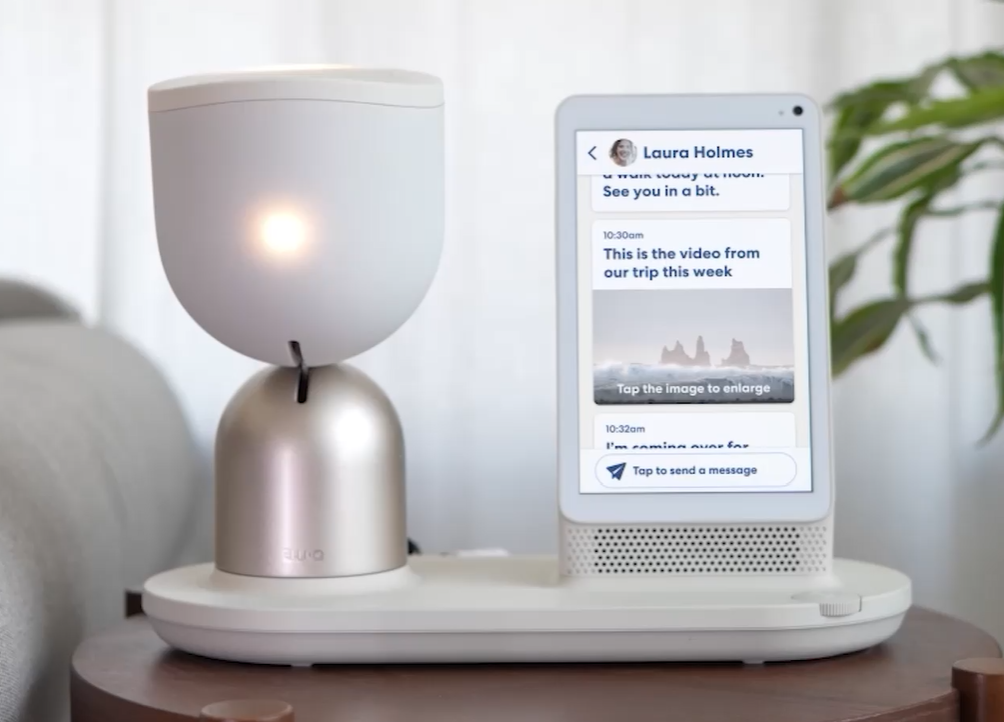
One such product is ElliQ, an AI-powered companion robot developed by Intuition Robotics (an Israel-based company with offices in the US and elsewhere). It’s specifically designed to support older adults, seniors, and aging loved ones in living healthier, happier, and more independent lives at home. Launched commercially around 2022, it’s marketed as a proactive “sidekick” that combats loneliness, promotes wellness, and provides daily companionship without requiring a smartphone, computer, or constant human input.
Physically, ElliQ resembles a small, tabletop device with a movable, emotive “head” (a lamp-like screen that tilts, lights up, and expresses emotions through movement and color) combined with a built-in display for visuals like video calls, photos, or activities. It uses voice activation, natural conversation, sounds, lights, and a touch screen for interaction. Unlike passive assistants (e.g., Alexa), ElliQ is proactive. It initiates conversations, checks in throughout the day (like “How are you feeling this morning?”), suggests activities, and builds a relationship over time by learning user preferences.
Some might find this creepy of course. AI companions are already a controversial subject, so this won’t be for everyone. We will need all sorts of safeguards over time as the AI becomes more powerful.
But the potential here is worth pursuing. The AI will get better, and the robotics will get better. We can revolutionize senior care with these types of devices, which will then make the human worker support even more effective.
The NY Times has a story of one elderly woman who is benefitting from having her ElliQ at home. Over time we can learn what works and what doesn’t, and also deal with problems as they arise.
This industry will be exploding and it will be fascinating to see how it develops.
