Category: Health Care Policy (Page 16 of 22)

Government Subsidized Obesity?

When you consider that there are more tax dollars being spent on junk food than on fruits and vegetables it seems obvious that there is a conflict of interest.

Spending tax dollars on health care to combat childhood obesity and type 2 diabetes while fueling the problem with those very same dollars seems like a fool’s errand, to be sure.

It makes the efforts of people like Michelle Obama look downright ridiculous in face of the facts.

Health Insurance Premiums Show Sharp Increase in 2011

Health insurance premiums increase leaving consumers and employers to decide how to pay for services.

Including employers’ contributions, the overall premium has increased 113 percent since 2001 to $15,073 a year.

More workers, especially in smaller firms, continue to join high-deductible health plans. Thirty-one percent of covered employees this year have to pay at least $1,000 in single plans before coverage kicks in, up from 27 percent last year.

The survey also highlighted some early results of President Barack Obama’s healthcare reform.

Under one of the few provisions already in effect, people under the age of 26 are now allowed to remain covered by their parents’ insurance plans to curb historically high uninsured rates in that age group. The Kaiser survey estimated that U.S. companies have added 2.3 million young adults to their parents’ family health policies.

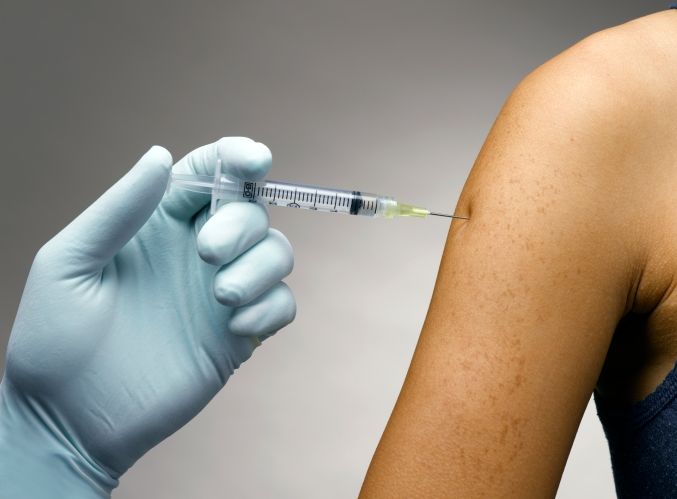
CDC Urges Flu Vaccine, Without Question

The CDC is strongly recommending the flu vaccinethis year.

For the immune-compromised, the elderly, children and pregnant women, it is the best way to be protected during flu season.

Last flu season, about 130.9 million Americans, or 43 percent of the U.S. population, received a flu shot. That’s about 8 million more than the previous season, said Dr. Thomas Frieden, director of the Centers for Disease Control and Prevention.

While researchers can’t predict exactly what this flu season will hold, “We can say with certainly that the best way to protect yourself, your family and your community is to get a flu shot,” Frieden said at a NFID news conference today.

“For most people, the flu makes them sick for a few days, but for others — especially children, the elderly and people with underlying health conditions — it can be life-threatening,” Frieden said.

The War on Cancer Continues

The War on Cancer wages on and forty years after President Nixon signed the National Cancer Act into law, some big successes have followed; Breast cancer deaths fell about 28 percent from 1990 to 2006, while deaths from cervical cancer have dropped nearly 31 percent.

Colorectal deaths have fallen 28 percent in women and 33 percent in men; deaths from leukemia have fallen nearly 15 percent in women and 10 percent in men; and deaths from stomach cancer have fallen 34 percent in women and 43 percent in men.

Many more men are also surviving prostate cancer, with death rates falling 39 percent.

The National Cancer Act promised more funding for cancer research and prevention. Since then, death rates for many cancers have dropped significantly. From 1990 to 2007, death rates for all cancers combined dropped 22 percent for men and 14 percent for women, resulting in nearly 900,000 fewer deaths during that time, according to the report.

Today, more than 68 percent of adults live five years or more after being diagnosed, up from 50 percent in 1975. The five-year survival rate for all childhood cancers combined is 80 percent, compared to 52 percent in 1975.

There are about 12 million cancer survivors living in the United States; 15 percent of them were diagnosed 20 or more years ago.

U.N. Meeting could Be Compromised by Big Bussiness

The U.N. could be influenced by special interest groups who have a financial stake in keeping the population ill.

“There are clear conflicts for the corporations that contribute to and profit from the sales of alcoholic beverages, foods with high fat, salt, and sugar contents, and tobacco products — all of which are important causes of NCDs,” they wrote.

“Failure to address these concerns will undermine the development of competent policy … and the confidence the global community and the public at large have in the UN’s and WHO’s ability to govern and advance public health.”

« Older posts Newer posts »

© 2026 MedClient.com

Theme by Anders NorenUp ↑