Category: Nutrition (Page 9 of 48)

The Battle Over Labeling Genetically Modified Foods

Genetically modified foods, or GMO’s, are at the center of much heated debate.

American’s are now demanding to know what exactly it is that they are eating.

Is our food safe? What, if any are the long term effects of consuming genetically modified foods and the chemicals with which they are sprayed?

Tens of millions of dollars are expected to be spent on the election showdown. It pits consumer groups and the organic food industry, both of which support mandatory labeling, against more conventional farmers, agricultural biotechnology companies like Monsanto and many of the nation’s best-known food brands like Kellogg’s and Kraft.

The heightened stakes have added fuel to a long-simmering debate over the merits of genetically engineered crops, which many scientists and farmers believe could be useful in meeting the world’s rapidly expanding food needs.

Supporters of labeling argue that consumers have a right to know when food has been modified with genes from another species, which they say is fundamentally different from the selective breeding process used in nearly all crops.

Producers fear that labeling will lead to consumer’s rejection of such genetically engineered products without knowing the whole story.
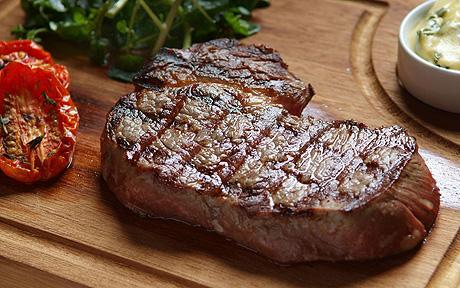
Meat Is Macho, Veggies Are Girlie

It seems like vegetarians have an image problem; they’re feminine.

In an effort to encourage men toward better, healthier diets, it is necessary to make veggie burgers and salads more masculine.

“In the (distant) past, meat was associated with strength. It was important for males to have more muscles than females in our social evolution — for hunting and fighting,” said Wansink, the John S. Dyson endowed chair of marketing at Cornell University. “That association remained — not between protein and muscles but between meat and muscles. It started a long time ago and it’s still powerful today.”

Eating On A Schedule Helps Reduce Weight Gain

For optimal nutrient digestion and absorption, eating on a schedule may be the best way to help your body keep off excess weight.

This may be the overlooked factor in the weight loss equation.

“Every organ has a clock,” said study researcher Satchidananda Panda, of the Salk Institute for Biological Studies in La Jolla, Calif. That means there are times that our livers, intestines, muscles and other organs work at peak efficiency, and other times when they are — more or less — sleeping, Panda said.
These metabolic cycles are critical for processes such as cholesterol breakdown, and they should be turned on when we eat and turned off when we don’t, Panda said. When mice or people eat frequently throughout the day and night, it can throw off those normal metabolic cycles, he added.

Good Fats Benefit Your Brain

When it comes to our bodies we all know that the good fats are best.

But what about our brains?

The results published online May 18 in the journal Annals of Neurology has shown that the cognitive function of older women who ate monounsaturated fats was better than those who ate saturated and trans fats.

Compared with those women who ate the lowest amounts of saturated fats, women in the highest saturated-fat category showed worse overall cognition and memory over the four years of testing. Women who ate the most mono-unsaturated fats, which can be found in olive oil, had better patterns of cognitive scores over time. Trans fats weren’t associated with changes in cognition over time, the researchers reported.

With diseases such as Alzheimer’s and dementia on the rise, the benefits could be greater that simply better memories and improved cognition.

Preventive measures to stem the increase of debilitating brain illness could benefit millions.

Java Junkies Live Longer

Good news for coffee addicts who get conflicting news about their favorite beverage.

Coffee has more than 1,000 compounds and the effects of these compounds on human health have yet to be discovered.

Although it is not certain exactly why coffee benefits health there definitely seems to be some correlation.

Overall, in the U.S. about 64 percent of adults drink coffee daily, according to Joe DeRupo, spokesman for the National Coffee Association. At 3.2 cups a piece, that amounts to some 479 million cups a day, agency figures indicate.
Those coffee fans can take the new results seriously. The mortality reduction is modest but solid, said Freedman, whose study offered the size and power to document associations other researchers had only suspected.
He and his team in NIC’s Division of Cancer Epidemiology and Genetics reviewed the coffee habits of more than 402,000 people followed between 1995 and 2008, including more than 52,000 who died.

« Older posts Newer posts »

© 2026 MedClient.com

Theme by Anders NorenUp ↑