Category: Research (Page 10 of 93)

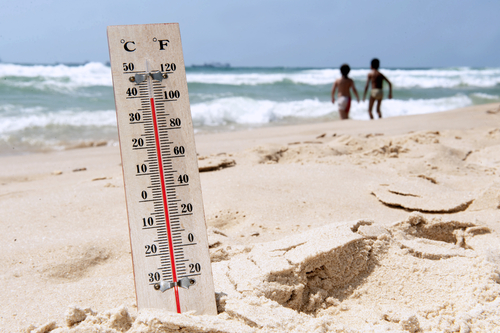
Summer Heat Can Be Deadly But Why?

Record heat has claimed 23 lives and the weather shows no signs of letting up.

But what is it that causes people to succumb to high temperatures?

The ability to sweat is what keeps the body cool.
Once high humidity becomes part of the equation, sweating is no longer as effective.

Extreme temperatures make it difficult for a heat-stressed individual to be aware of the danger since the brain and central nervous system are particularly sensitive to high internal temperatures.

Hot weather alone is not dangerous, said Chris Minson, an environmental physiologist at the University of Oregon, Eugene. Instead, it’s a combination of hot temperatures, high humidity, and often preexisting health conditions that can push a person’s core body temperature to reach the danger zone of 104 F. At that point, the nervous system goes haywire, the heart experiences excessive stress, and organ systems begin to fail.

Caffeine May Lower The Risk Of Common Skin Cancer

The caffeine in coffee as well as in tea, soda and chocolate may be responsible for lowering the risk of Basal Cell Carcinoma ( BCC ).

A twenty year study has shown an inverse relationship between coffee drinkers and those who develop BCC.

“These results really suggest that it is the caffeine in coffee that is responsible for the decreased risk of basal cell carcinoma associated with increasing coffee consumption,” Jiali Han, associate professor at Brigham and Women’s Hospital, Harvard Medical School in Boston as well as the study’s lead author, said in a press release. “This would be consistent with published mouse data, which indicate caffeine can block skin tumor formation. However, more studies in different population cohorts and additional mechanistic studies will be needed before we can say this definitively.”

Along with sunscreen, limiting sun exposure and regular check-ups, caffeine could be an enjoyable way to help prevent skin cancer.

Will Eating After Dark Pack On The Pounds?

Does eating late make you gain weight?

There are those who would say that calories are calories and as long as you don’t consume more than you use then you won’t gain weight.

But the research has shown that it is a bit more complicated than that.

There are optimal times for our body to burn fat and one is at night.

New studies reveal that to burn the most fat, you need to go 12 hours without eating—say, from 8 p.m. to 8 a.m. So it’s smart to time your calorie intake accordingly.

You’re most likely to make healthy food choices when you’re not tired.

Choose nutritious foods and don’t eat when it’s dark outside.

Pretty simple.

The Squat May Be The Best Exercise Of All

Weight training becomes important as we age and becomes crucial it helping us to maintain strength and the ability to perform simple tasks.

Keeping muscles strong improves skeletal health and helps to support balance and good posture.

The loss of muscles mass can be remedied with strength training and the squat seems to be the best exercise to engage all the muscle groups.

Americans Are Eating Less Red Meat For Many Different Reasons

Health concerns top the list of reasons many gave for consuming less red meat.

With more evidence pointing to environmental factors for the rise in heart disease and many cancers, red meat has been at the center of the debate for quite some time.

“American culture has been a meat-and-potatoes culture for a very long time,” Fabius tells The Salt. “Now we’re in a period of believing that intake of meat should be reduced in this country; we’re talking about a generational transition.”

Among those who are eating less meat, 66 percent said they’re worried about the health effects; 47 percent said cost is a factor, while 30 percent were concerned about animal welfare, and 29 percent have limited their meat intake out of a concern for the environment.

Robert Lawrence, professor of environmental health sciences and director of the Center for a Livable Future at the Johns Hopkins School of Public Health, says this is consistent with what he found when he asked people in 2002 why they might eat less meat. “Health concerns still remain the No. 1 reason people might consider cutting back on meat,” says Lawrence, who helped launch the Meatless Monday initiative.

« Older posts Newer posts »

© 2026 MedClient.com

Theme by Anders NorenUp ↑