Category: Research (Page 12 of 93)

Coconut Oil Shows Amazing Results In Treating Alzheimer’s Disease

Coconut oil is credited with a great deal of health benefits which range from promoting weight loss to fighting bacteria, fungus and viruses, however it is the promise of a treatment for Alzheimer’s and dementia that has made the news.

Find ways to get nature’s superfood into your diet for all of the many health benefits offered by coconut oil.

Food “Stop Sign” To Control Over Eating

Edible food “Stop Signs” may be just the thing to remind you to quite eating.

The visual reminder helps people to manage portion control and acts to snap you out of the compulsion to continue eating out of momentum.

And it actually works.

People consumed 250 less calories when the edible “stop signs” were used.

Such mindless habit-eating helps explain why some people go overboard while snacking. Other reasons, the study notes: people aren’t good at self-monitoring how much they eat, or they eat what they believe — incorrectly — is an appropriate portion.

“By inserting visual markers in a snack-food package, we may be helping them to monitor how much they are eating and interrupt their semi-automated eating habits,” lead researcher Brian Wansink, director of the Cornell Food and Brand Lab and author of Mindless Eating: Why We Eat More Than We Think, said in a statement.

Cancer Cases To Increase Worldwide 75 Percent By 2030

As Western lifestyle habits extend into developing countries, so too, do the diseases which come with them.

In a paper from the World Health Organization’s International Agency for Research on Cancer (IARC) in Lyon, France the findings indicate that along with a rise in living standards, cancer will be on the rise.

A 75 percent increase in cancer by 2030 is expected in the developing world.

The researchers said that rising living standards in less developed countries would probably lead to a decrease in the number of infection-related cancers. But it was also likely there would also be an increase in types of the disease usually seen in richer countries.
They predicted that middle-income countries such as China, India and Africa could see an increase of 78 percent in the number of cancer cases by 2030.
Cases in less developed regions were expected to see a 93 percent rise over the same period, said the paper published in the journal Lancet Oncology.
Those rises would more than offset signs of a decline in cervical, stomach and other kinds of cancer in wealthier nations, said the researchers.

The most common types of cancer in the world are lung cancer, female breast cancer, colorectal cancer, stomach cancer, prostate cancer, liver cancer and cervical cancer.

Being Sleepy Behind The Wheel Is As Dangerous As Being Drunk Behind The Wheel

It is a frightening but true fact and especially disconcerting when you consider that most Americans are sleep deprived.

The study, under the direction of Dr. Nicholas Moore at the Centre Hospitalo-Universitaire de Bordeaux in France published as a letter in the Archives of Internal Medicine, found that drivers who were either drunk or sleepy were at least twice as likely to be responsible for a vehicle accident compared to their well-rested or sober counterparts.

Researchers analyzed information from 679 drivers who were admitted to a hospital in southwest France who were admitted to the hospital for more than 24 hours because of a serious accident between 2007 and 2009.

Christopher Drake, an associate scientist at the Henry Ford Hospital Sleep Disorders and Research Center in Detroit, said the findings do not change what was already known, but the study is still “interesting.”
“We know from experimental studies that just four hours of sleep loss will produce as much impairment as a six pack. If you have a whole night of sleep loss, that’s equivalent to having a blood alcohol content of 0.19,” Drake, who was not involved with the new research, told Reuters Health.

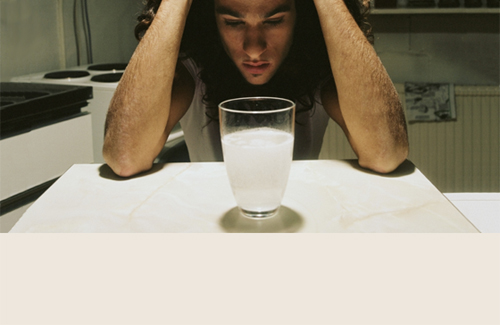
The Good And Bad Of Hangover Cures

Over indulging often mean hangovers.

There are all kinds of remedies but which ones really work?

The “hair of the dog”, the big greasy breakfast, drinking lots of water in between cocktails or pots of coffee the next morning?

Is there any science to these old standbys or is it just fiction?

John Brick, director of consulting firm Intoxikon and author of “The Doctor’s Hangover Handbook: The Intelligent Person’s Guide to Curious and Scientific Facts About Alcohol and Hangovers”, offers up a few suggestions that might help was your pain.

« Older posts Newer posts »

© 2026 MedClient.com

Theme by Anders NorenUp ↑